Shopify in 2025: What Serious Brands Are Doing Differently With Their Stores
Shopify is no longer just a platform for hobbyists—it is now a serious infrastructure choice for brands that need to scale e-commerce across channels and geographies. In 2025, the difference between average Shopify stores and high-performing ones comes down to deliberate strategy around growth, multi-channel integration, and conversion optimization.
Shopify's 2025 Growth, Multi-Channel Usage, and GMV Trends
Shopify continues to expand rapidly, powering millions of stores worldwide with strong year-over-year metrics.
Shopify's global merchant count and store growth reflect its dominance in small-to-mid-sized e-commerce.
Gross Merchandise Volume (GMV) has seen consistent increases, with major sales events like Black Friday/Cyber Monday hitting record highs and double-digit growth.
Over 90% of Shopify merchants now integrate with multiple sales channels (Instagram, Facebook, Amazon, TikTok, offline POS), making omnichannel capabilities a core expectation.
These trends signal a shift: Shopify is increasingly the platform for brands that need more than basic online selling—they need systems that handle complexity, speed, and cross-platform consistency.
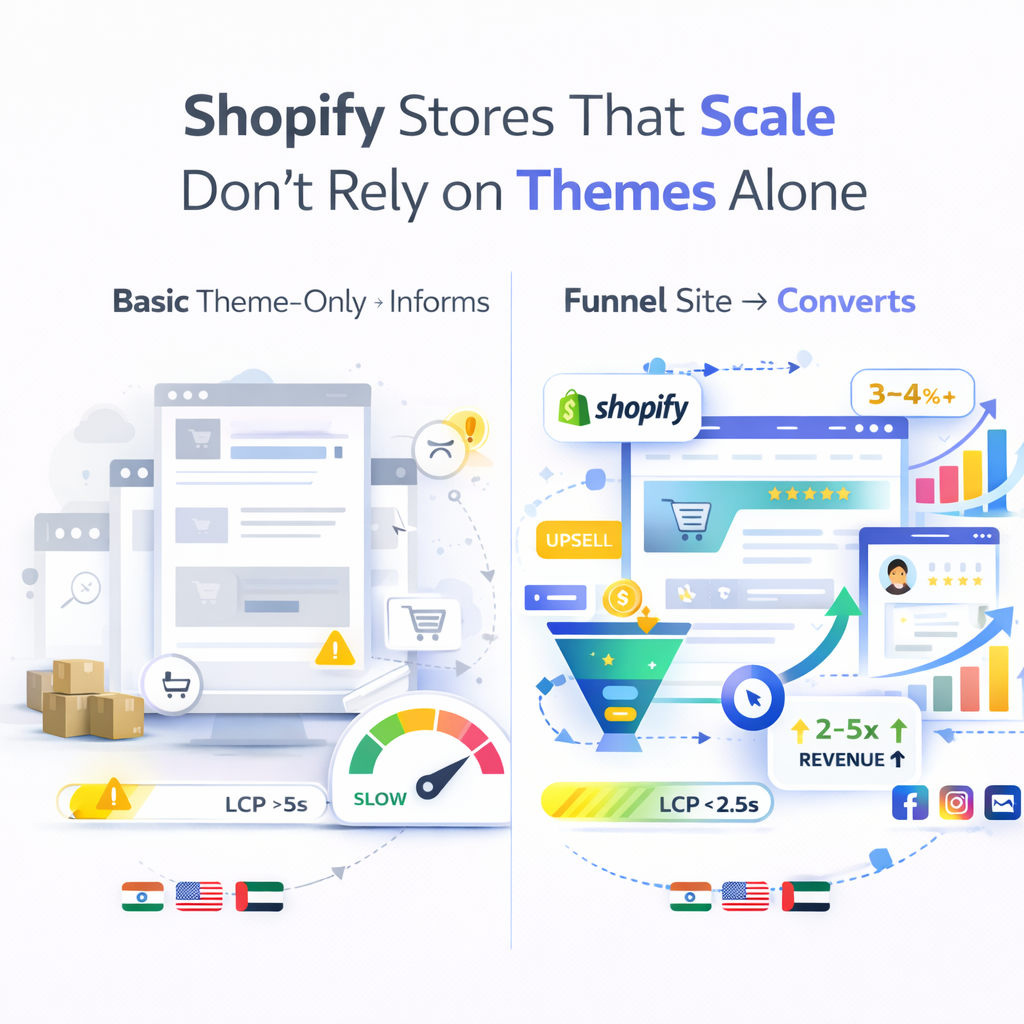
Why "Theme-Only" Builds Are Not Enough for Competitive Categories
Most Shopify stores start with a theme and some customizations. This works for low-competition niches but fails where real revenue is at stake.
Common limitations of theme-only approaches:
Generic UX: Themes are designed for broad appeal, not specific buyer journeys or product categories.
Performance Issues: Unoptimized themes lead to slow load times, especially when layered with apps and custom code.
Limited Scalability: Adding products, channels, or features quickly creates bloat and poor user experience.
Weak Conversion Tools: Basic checkout and product pages rarely include the CRO elements that lift AOV or reduce cart abandonment.
In competitive categories, where customers compare multiple stores, these shortcomings mean lost sales to faster, more intentional experiences.
How AzxMatrix Approaches Structure, Speed, and CRO for Scaling Brands
AzxMatrix, a Shopify development agency with expertise across India, the US, and UAE markets, treats Shopify builds as scalable revenue systems, not just theme installations.
1. Strategic Store Structure
Every Shopify project starts with the business model and audience:
Product catalog organized by buyer intent (browsers vs. researchers vs. repeat buyers)
Navigation and filtering built for category depth and discoverability
Landing pages tailored to traffic sources (social ads, search, email campaigns)
This ensures the store architecture supports growth without constant rework.
2. Performance Optimization as a Foundation
Speed is non-negotiable for rankings, conversions, and user retention. AzxMatrix focuses on:
Theme code optimization and lazy loading for fast LCP
Image and asset management to reduce bandwidth
App minimization and custom solutions where plugins fall short
The goal is a store that performs well globally, from Indian mobile users to UAE premium shoppers.
3. Conversion Rate Optimization (CRO) Built In
CRO is embedded from the start, not bolted on later:
Product pages with clear benefits, social proof, FAQs, and urgency elements
Checkout flows streamlined to reduce abandonment (progress indicators, guest options, multiple payments)
Post-purchase upsells, reviews, and loyalty hooks to lift lifetime value
A/B testing frameworks for ongoing refinement
These elements directly address the high cart abandonment rates common in e-commerce.
4. Multi-Channel and Global Readiness
With Shopify's channel ecosystem, AzxMatrix ensures:
Seamless sync with Instagram, Facebook, and Amazon
Localized experiences for markets like India (UPI, Hindi), US (Apple Pay), and UAE (COD, Arabic)
Headless or hybrid options for brands planning advanced frontends
This prepares stores for expansion without technical debt.
The 2026 Shopify Imperative
Serious brands on Shopify in 2025 are not just using the platform—they are engineering it for performance, scalability, and conversion. Theme-only builds suffice for testing, but scaling requires intentional structure, speed, and CRO from day one.
AzxMatrix builds Shopify stores this way, turning platforms into revenue engines for brands across India, the US, and UAE. The question for 2026 is clear: is your store a generic theme, or a system designed to win in competitive markets