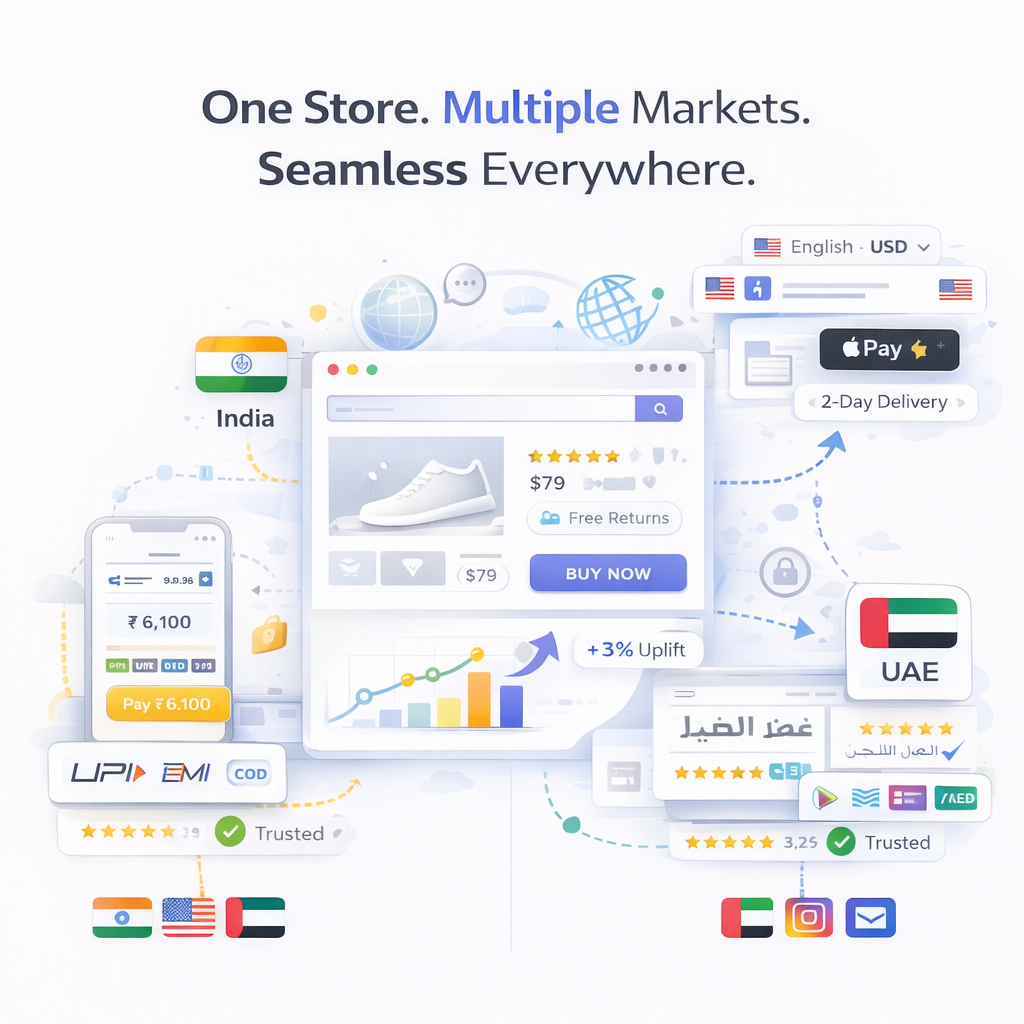
Building E‑commerce for India, US, and UAE: One Codebase, Three Behaviours
E-commerce success in 2025–2026 requires understanding that one codebase must deliver three distinct experiences. India, the US, and UAE represent massive opportunities, but their users shop differently. Brands that ignore these behavioural differences build stores that convert poorly or fail to scale.
How User Expectations Differ Across India, US, and UAE
User behaviour varies sharply by region, driven by infrastructure, culture, and economics.
India
Mobile dominance: Over 80% of e-commerce traffic is mobile, with users on 4G/5G but expecting instant loads.
Payments: UPI, wallets, and EMI dominate; COD remains popular for trust.
Logistics: Fast local delivery (1–2 days) is table stakes; cash-on-delivery and easy returns are expected.
UX: Price-sensitive scanning—clear pricing, discounts, and comparisons first.
US
Desktop + mobile balance: Users research extensively but convert on desktop for complex purchases.
Payments: Credit cards, Apple Pay, PayPal; BNPL like Affirm gaining traction.
Logistics: Free shipping thresholds, 2-day Prime expectations, reliable tracking.
UX: Trust via reviews, detailed specs, and social proof; security badges critical.
UAE
Premium mobile-first: High smartphone penetration with luxury expectations.
Payments: Cards, Apple Pay, cash on delivery; region-specific gateways.
Logistics: Same-day/next-day delivery; free shipping for mid-to-high orders.
UX: Multilingual (Arabic/English), culturally sensitive visuals, high-end presentation.
These differences mean a generic store will underperform in at least two markets.
The Importance of Localization, Trust Signals, and Mobile-First Layouts
Localization
Beyond translation, localization means adapting UX to local norms:
Currency and pricing displays (including taxes, EMI options).
Product units (kg vs lbs), dates, and formats.
Culturally relevant imagery, holidays, and promotions.
Trust Signals
Regional trust varies:
India: COD availability, return policies, local reviews.
US: SSL, privacy compliance, third-party reviews (Trustpilot).
UAE: Halal certifications, Arabic support, premium branding.
Mobile-First Layouts
Mobile is universal but expectations differ: thumb-friendly navigation in India, gesture-heavy scrolling in the US, Arabic RTL support in UAE. Responsive design must prioritize speed, readability, and one-tap actions.
How AzxMatrix Designs E‑commerce for Cross-Border Growth
AzxMatrix, an ecommerce development company in UAE with operations across India and the US, builds single codebases that intelligently adapt to these behaviours.
1. Unified Architecture with Regional Intelligence
Headless or hybrid Shopify/WooCommerce: Core logic stays consistent; frontends adapt via geolocation, language detection, or user preference.
Dynamic content: Product pages show region-specific pricing, shipping estimates, and payment options.
Modular design: Easy swaps for local gateways (Razorpay for India, Stripe for US, PayTabs for UAE).
2. Localization at Scale
Automated language switching with RTL support for Arabic.
Geo-targeted banners, currencies, and logistics calculators.
Content variants: Indian EMI breakdowns, US size charts, UAE luxury bundles.
3. Trust and UX Tailored to Market
India: Prominent COD/EMI buttons, 30-day returns, vernacular FAQs.
US: Review widgets, free shipping bars, abandoned cart recovery.
UAE: Premium visuals, Arabic chat support, same-day delivery badges.
Mobile layouts prioritize speed (under 3s load), infinite scroll for browsing, and frictionless checkout.
4. Performance and Analytics for All Regions
Global CDN, image optimization, and A/B testing ensure baseline performance. Analytics track region-specific metrics: cart abandonment by market, mobile vs desktop conversion, payment method success rates.
Scaling E‑commerce Without Fragmentation
Building for India, US, and UAE from one codebase is now feasible and efficient. The key is designing for behavioural diversity upfront, not retrofitting later.
AzxMatrix creates these adaptable systems so brands can launch once and expand seamlessly. For 2026, the winners will be those whose e-commerce feels local and trusted in every market they serve.